
After a miscarriage
After a miscarriage, you may well need time to recover physically as well as emotionally. You may have some questions about what happens to the remains of your baby, or you might be asked to make some difficult decisions.
Physical recovery after a miscarriage
Everyone is different, but many women find that it can take them anything from a few days to a few weeks to recover physically from a miscarriage. You may find that you are particularly tired or feel generally run down. Or you may feel better or simply relieved once the process has happened, especially if it took a long time or if there was a long period where it wasn’t clear if you were miscarrying or not.
All sorts of things can have an impact on your recovery, including how much bleeding you have had and how long the process has taken. There are no absolutes, but if you are worried that it is taking you a long time to recover physically, it might be worth talking to your GP.
Take a look at our pages on ectopic pregnancy and molar pregnancy for information on these conditions.
If you need time off work to recover, physically or emotionally, you may find it helpful to look at the information and support for employees on our Miscarriage and the Workplace hub.
Periods after miscarriage
Most women will get a period somewhere between four and six weeks after their miscarriage, and it may be heavier and longer than usual. It can take a while for periods to get back to a fairly regular pattern.
After the miscarriage: what happens to your baby
When a baby dies before 24 weeks of pregnancy, there is no legal requirement to have a burial or cremation. Even so, most hospitals have sensitive disposal policies and your baby may be cremated or buried, perhaps along with the remains of other miscarried babies.
Guidance from the Royal College of Nursing advises that hospitals should offer parents the option of arranging individual or shared cremation or burial of pregnancy remains, usually paid for by the Trust; or, if parents prefer, the option of taking the baby’s remains home and making private arrangements. You should be given time to decide – as well as the option not to make a decision at all.
However, actual practice varies a great deal and sadly, some hospitals may still treat the remains of an early loss as clinical waste unless you request otherwise. (This is not illegal in England and Wales, although Scottish government guidance is different.)
If you want to find out about the arrangements at your hospital, ask a nurse or midwife on the ward or unit where you were cared for, the hospital chaplain, the PALS (Patient Advice and Liaison) officer, or the hospital bereavement service.
You may want to make your own arrangements for burying or cremating the remains of your baby, whether you use a funeral director or a specialist cremation service or choose to bury the remains at home or somewhere else. You can read more about this on page 14 of this leaflet and below. There are some things to think about and you may want to contact us for further information.
If you miscarry at home
If you miscarry at home or somewhere else that’s not a hospital, you are very likely to pass the remains of your pregnancy into the toilet. (This can happen in hospital too.) You may look at what has come away and see a pregnancy sac and/or the fetus – or something you think might be the fetus. You might want to simply flush the toilet – many people do that automatically – or you may want to remove the remains for a closer look. That’s natural too.
You might think about bringing the remains to your GP or hospital, perhaps for them to confirm that you have miscarried or because they may be able to do some tests. Tests on pregnancy remains aren’t usually done unless you are having other investigations, but if they are, you may be asked to keep the remains cold until you can bring them to the hospital.
You might choose to ask the hospital or GP to dispose of the remains of your pregnancy. Or you may decide to bury the remains yourself: at home, in the garden (as Erin did); or in a planter with flowers or a shrub; or perhaps somewhere else, as Jenny did. There are some things to think about and you may want to contact us for further information.
A certificate for your baby
Although there is no official registration of babies lost before 24 weeks of pregnancy in the UK, people in England and Scotland may be able to receive a certificate of loss. You can find out how to apply in England here and in Scotland here. We very much hope that Northern Ireland and Wales will do the same soon.
In the meantime, some hospitals will give you a certificate in memory of your baby. If they don’t offer it, you can ask:
- a nurse or midwife on the ward
- the hospital chaplain
- the bereavement office
We can provide information and guidance for hospitals wanting to provide a certificate, which you can find here.
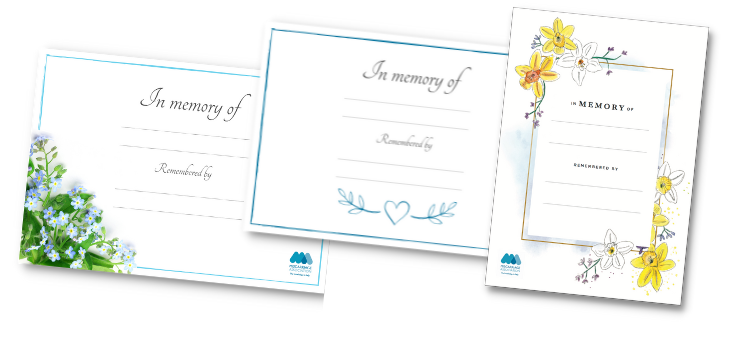
We are pleased to also be able to provide a selection of memorial certificates from the Miscarriage Association.
Pregnancy-related mailings
The national Mailing Preference Service allows consumers to register their wish not to receive unsolicited direct mail. They also have a Baby Mailing Preference Service to enable parents who have suffered a miscarriage or bereavement of a baby in the first weeks of life to register their wish not to receive baby related mailings. You can find further information about stopping or reducing targeted advertising and emails here.